Blog
Traceability Software for The Meat Industry: What are the Benefits?
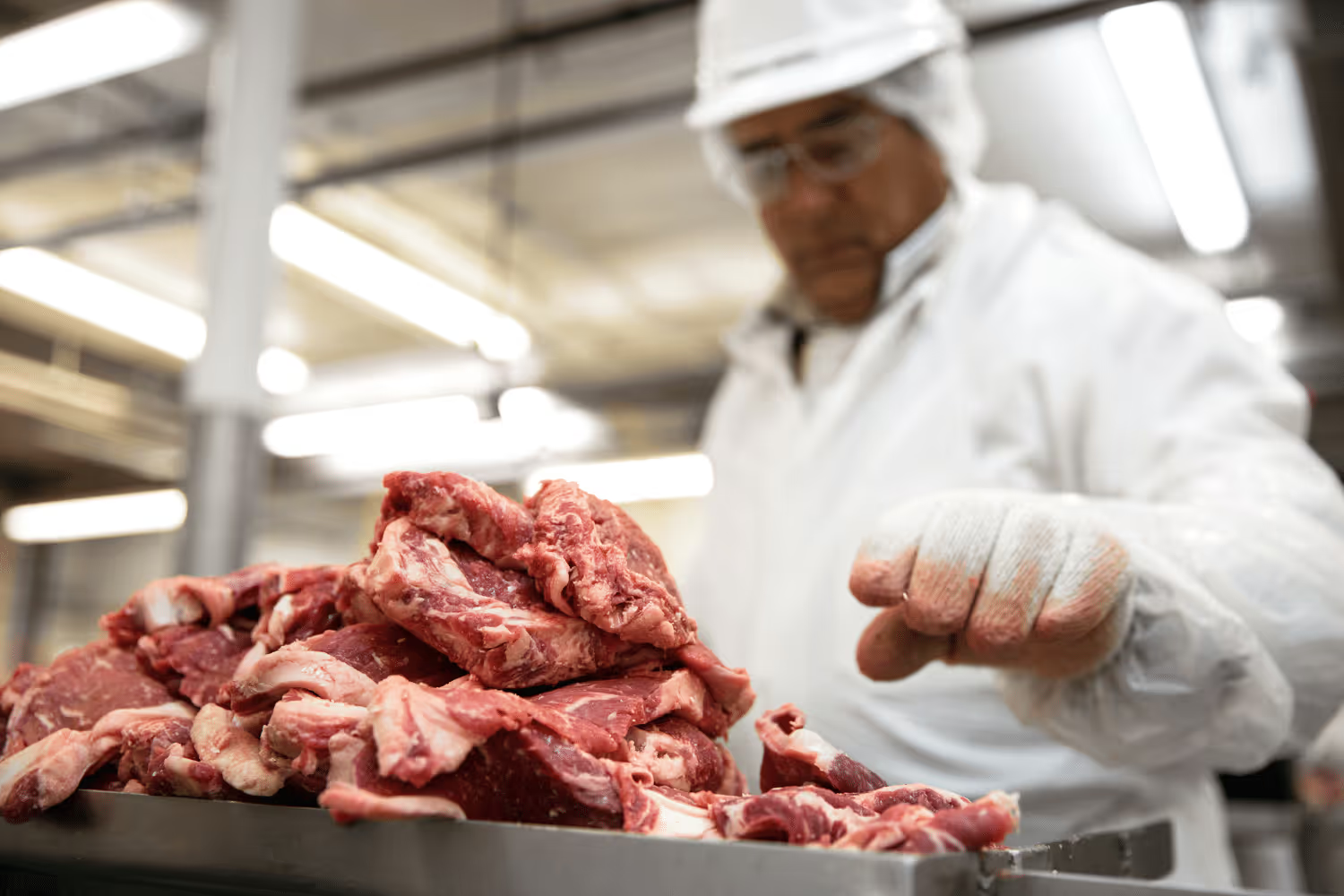
Traceability Software is a must in the Meat Industry
For meat processing plants, nothing is more important than ensuring safety and quality. The key to achieving this is having a robust traceability software solution.
Why traceability software matters
From farm to fork, traceability plays an enormous role helping meat processing plants follow strict food safety rules and stay compliant at all times.
Whether it’s the FDA’s Food Safety Modernization Act in the US or the Canadian Food Safety Inspection Agency regulation in Canada, reliable traceability is a must-have for meat processors. Traceability software allows meat processing plants to track each batch of meat from farm to consumer. It can also help identify the source of contamination and quality issues and help meat processors take appropriate action to prevent issues from reaching consumers.
In the fast-paced world of the food industry, where accuracy and safety are top priorities, picking an advanced traceability software solution isn't an easy task. Carlisle Technology specializes in offering these solutions, specifically tailored for the meat industry. Our Symphony suite offers traceability software, weighing systems, and warehouse management systems.
Navigating Meat Industry Dynamics
With the North American meat market growing at an average rate of 4% annually, food safety will come into play to ensure the quality of meat to consumers. Demand in the US and Canada exhibited strong growth as disposable income increased and consumers could purchase more premium cuts of meat. The biggest players in beef, pork, and poultry processing are JBS Holding, Tyson Foods, and Cargill in the US, and Maple Leaf Foods, Cargill Limited, and Olymel in Canada. All of these large industry players rely on traceability solutions like Symphony to ensure the safety and quality of their meat products.
What does traceability mean in the meat industry?
Traceability refers to the ability to systematically track and document the process from farm to consumer, from the origin, production, processing, distribution, and handling of meat throughout the supply chain. It involves recording and maintaining detailed information about the lot or batch of meat.
Traceability is crucial for meat processing plants, serving not only compliance purposes but also ensuring a competitive edge in the consumer market. In the extremely competitive meat industry across North America, companies strive to deliver the highest value products, making traceability a key factor in maintaining their position in the market.
Traceability serves several critical purposes for food safety, quality assurance, regulatory compliance, and consumer confidence. For food safety, traceability enables quick and precise identification of any potential contamination or foodborne illness outbreak.
By tracking the movement, authorities can recall affected batches to prevent distribution and consumption by consumers. Quality Assurance is another critical point as it allows manufacturers to monitor and maintain quality standards throughout the supply chain. By documenting each stage of production, companies can identify and address any issues with product quality. Companies also need to comply with government regulatory standards that are in place.
Lastly, it is important to have consumer confidence. Traceability ensures transparency and accountability in the meat supply chain.
How does meat traceability software work?
The functionality of traceability software begins during the receiving of live animals. Software is used to capture animal data such as type, origin, weight, location, and date. Animals are tracked through unique identification systems like barcodes, RFID tags, or vision systems. Carlisle Technology’s Symphony Primary Processing Software meat processors track animals across the harvest process.
To ensure transparency, safety, and compliance, typical traceability software will include an MES (manufacturing execution system) to track products through the manufacturing cycle. An MES normally includes lot or batch tracking, inventory management, and recall procedures.
Meat Traceability software also typically includes a warehouse management system that can optimize how a manufacturer handles their inventory. Inventory management gives users control over raw materials, work in progress, and finished goods. This software builds a serialized inventory that can be traced backward and forward throughout the supply chain. Sales and order fulfillment applications are also typically part of a traceability software solution.
Check out our Integrated Software Solutions Designed for the Food Industry.
What is HACCP traceability and why is it important?
HACCP (Hazard Analysis and Critical Control Points) traceability is a systematic method of tracking and documenting the movement of food products and ingredients throughout the entire production process. This includes identifying and monitoring critical control points, implementing measures to control these hazards, and maintaining records to demonstrate compliance with regulatory requirements.
In North America, HACCP traceability is significant for ensuring food safety and quality in meat processing plants for several reasons:
Regulatory Compliance: Stringent regulations and standards are in place to ensure the safety of food products.
Food Safety: HACCP traceability accurately traces the movement of products, and quickly identifies and responds to food safety issues, minimizing the risk of foodborne illness outbreaks and ensuring consumer safety.
Quality Assurance: Traceability systems enable meat processing plants to maintain the quality of their products and adhere to quality standards. This helps build consumer confidence in the safety and integrity of meat products.
Recall Management: HACCP traceability allows meat processing plants to quickly and accurately identify affected products, remove them, and trace them back to their source.
Why is food safety so vital in the meat industry?
When it comes to ensuring food safety, the meat industry faces several unique challenges, most of which revolve around microbial and cross-contamination. Salmonella, E. Coli, and Listeria monocytogenes are a few of the harmful microorganisms that pose a significant risk to meat products. Cross-contamination, which can occur occasionally during distribution, packaging, processing, and slaughter, is the result of germs spreading from one surface to another through repeated contact with contaminated hands, equipment, or surfaces.
Risks associated with foodborne illnesses are serious for people, companies, and public health. Severe symptoms like vomiting, diarrhea, fever, dehydration, and stomach discomfort can result from them. In addition to harming consumers' health, these illnesses cost food companies money because they reduce sales and erode consumer confidence in their brands.
Strong food safety regulations, including traceability software, reduce risks and maintain consumer confidence by preventing foodborne illnesses. Product traceability enables quick and accurate tracking and prompt action during contamination outbreaks. Implementing traceability demonstrates accountability, transparency, and regulatory compliance while streamlining supply chain operations with real-time visibility into product movement and inventory management.
How does traceability software ensure food safety in meat processing?
Traceability software features are tailored to enhance food safety and compliance. Here are some specific features:
- Real-Time Tracking: software provides real-time tracking of meat products throughout the process and monitors critical points in the food process.
- Batch / Lot Tracking software allows for precise lot and batch management based on various criteria such as origin, production date, and processing line.
- Quality Control software includes quality control features that enable meat processors to monitor and record key quality parameters at each processing step.
- Reporting software generates comprehensive compliance reports that adhere to regulatory requirements and industry standards.
- Integration with ERP Software- The software seamlessly integrates with existing ERP (Enterprise Resource Planning) systems used by meat processing plants, allowing for efficient data exchange and streamlined operations.
What are the advantages of traceability software for meat processing plants?
Implementing traceability software in meat processing plants offers several benefits.
- Improvement in Operational Efficiency: Traceability software can automate and streamline data collection, storage, and data retrieval processes, reducing manual errors and saving time.
- Cost Reduction: By automating data management meat manufacturers reduce the need for manual record keeping, this not only eliminates the risk of errors, but it also frees up resources and saves time and money.
- Enhance Quality Control: Traceability software enables meat manufacturers to accurately track the quality of their recipes, processes, and products and ensure product safety and consistency.
Overall, implementing traceability software in meat processing plants, such as Carlisle's solutions, offers a comprehensive approach to improving operational efficiency, reducing costs, enhancing quality control, ensuring supply chain transparency, and enabling data-driven decision-making.
Have more questions about traceability in the meat industry? Contact us today and speak to one of our industry experts to learn more about our innovative traceability solutions.
Written by: Joel Ramoso, Technical Sales – Carlisle Technology
Sign Up for Our Newsletter!
Receive updates on products, customer stories, and giveaways!
[ctct form="21261" show_title="false"]
Previous Blog Post
Next Blog Post
.jpg)
.jpg)
Let's talk.
Get in touch with our team to find the right solution for your processing plant.