Blog
Food Product Labeling Requirements in Canada: The Most Recent Updates
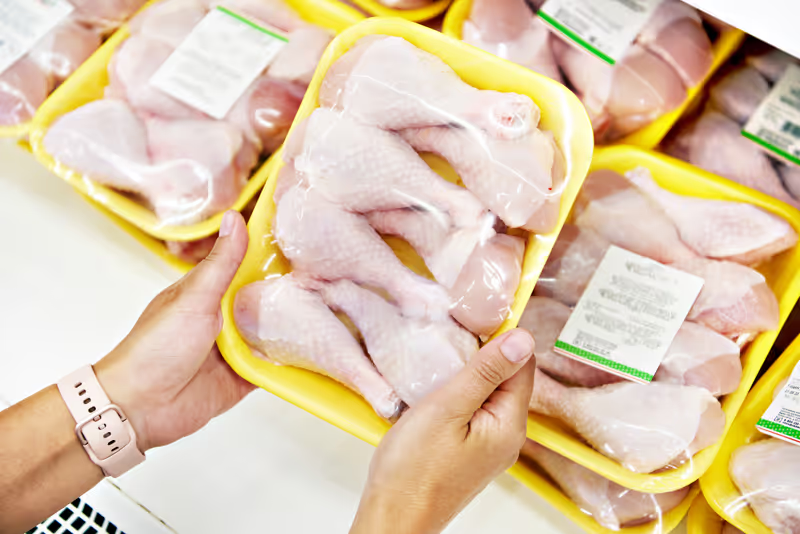
Canada's 2024 Food Product Labeling Update: What Meat Processing Businesses Need to Know
In 2024, Canada made significant changes to meat product labeling regulations to enhance customer safety, transparency, and informed decision-making. Here’s what meat processing businesses need to know:
Highlights from key changes to food labeling requirement in Canada:
- Front-of-Package Labeling (FOP): Clear and visible labeling on the front of the package.
- Country-of-Origin Labeling (COOL): Information on where the meat was produced.
- Clearly Defined Serving Sizes: Standardized serving sizes for better comparison.
- Comprehensive Nutritional Information: Detailed nutritional facts to help consumers make healthier choices.
- Traceability Data: Information that allows consumers to track the product back through the production chain.
New Guidelines from CFIA: Enhancing Transparency in Meat Product Labeling
Both meat products created, processed, or branded in Canada and those imported are subject to these labeling rules. Compliance is essential for companies that distribute and process meat. In addition to facilitating interprovincial trade and supporting export initiatives, proper labeling guarantees consumer trust. Furthermore, appropriate labeling has the power to sway customer decisions, which can negatively affect food businesses' ability to succeed in a cutthroat industry.
These changes are a part of Canada's larger initiatives to follow global best practices and address the growing demand from consumers for accountability and openness in the food sector. In a market that is becoming more competitive and health-conscious, meat producers and retailers must adhere to these new rules to retain market access and customer trust.
Updates and Changes in Food Product Labeling Requirements in Canada:
The Canadian Food Inspection Agency (CFIA) has introduced updated guidelines on meat product labeling, focusing on two key changes:
Retained Water Declaration: CFIA now requires raw single-ingredient meat products to declare their water residual content. This addresses concerns about manufacturers artificially increasing product weight by injecting water. By stating the percentage of retained water on labels, these rules ensure transparency and accuracy in meat composition, benefiting consumers.
Front-of-Package (FOP) Nutrition labeling: New regulations mandate FOP labeling for prepackaged foods high in saturated fat, sugar, and sodium. These products must display a black and white magnifying glass symbol on the front of the package for easy visibility. Scheduled for full implementation by January 2026, this initiative aims to empower consumers with clearer information about the nutritional quality of their food choices.
These changes underscore CFIA's commitment to transparency and consumer education in the food industry, promoting informed dietary decisions and ensuring labels reflect the true nature of the products.
Navigating Regulatory Compliance in 2024:
Recent changes to nutrition labeling regulations include more detailed nutritional information, clearer serving sizes, and updated daily value percentages to improve consumer understanding. Additionally, new rules introduced a front-of-package nutrition symbol for prepackaged products high in saturated fats, sugar, and sodium. Businesses are required to comply with these labeling requirements by January 2026, with a commitment to consumer health.
To navigate the evolving legal landscape, industry stakeholders must:
- Monitor Regulatory Updates: Stay informed about changing legal requirements.
- Update Labeling Practices: Adapt labels to meet new standards and ensure compliance.
- Seek Expert Guidance: Utilize resources like the Canadian Food Inspection Agency’s Industry Labeling Tool to maintain transparency and build consumer trust.
Penalties for Mislabeling:
Regarding mislabeling meat products in Canada, strict regulations are made to ensure accurate labeling and prevent food fraud. Here are three key points.
- Legal Requirements – All food sold in Canada must comply with the Food and Drugs Act (FDA), the Food and Drug Regulation (FDR), The Safe Food of Canadians Act (SFCA) and the Safe Food of Canadians Regulation (SFCR).
- Consequence for Mislabeling – The Canadian Food Inspection Agency enforces compliance. Penalties include fines, letters of non-compliance, administrative monetary penalties, suspension or cancelation of licenses, and prosecution if needed.
- Collaboration and correction - While criminal penalties exist (fines up to C$250,000 and imprisonment for three years), the CFIA generally works with companies to address non-compliance issues.
Ensuring Consumer Safety and Trust:
Recent changes in food and meat product labeling laws aim to enhance customer safety and trust through improved traceability, transparency, and adherence to safety standards. These changes:
- Provide clear information on product origin, ingredients, nutritional value, and allergens.
- Address consumer preferences for sustainability and ethical practices.
- Promote public health by preventing foodborne illnesses and catering to dietary needs.
- Compliance assures accurate and reliable information, reinforcing confidence in product quality and safety.
Industry experience makes a difference:
For the past 35 years, Carlisle Technology has been providing quality solutions, especially labeling strategies to meat processing companies in North America. To name a few, high-volume pork processing companies like Prestage Foods in Iowa have been given a hand in their labeling lines. With limited space, Carlisle Technology helped them label up to 32 cases per minute while ensuring accurate weighing and sorting. This automated solution significantly increased throughput, reduced labeling errors, and minimized human dependency.
Conclusion:
The recent changes to food and meat product labeling laws in Canada focus on enhanced traceability, transparency, and the inclusion of comprehensive information about product origin (COOL), Front of Package (FOP), ingredients, nutritional value, and potential allergens, along with reflecting sustainable and ethical practices. These changes aim to prevent foodborne illnesses and support public health. Staying informed about these developments is crucial for producers to meet regulatory standards, provide accurate information to consumers, and adapt to evolving expectations. Compliance with these regulations ensures consumer safety, fosters trust, and upholds the integrity of the meat processing industry in Canada.
To navigate these new requirements and ensure compliance, consider partnering with Carlisle Technology. Carlisle Technology offers advanced labeling technology, industry-standard solutions, comprehensive training programs, and quality control support to help your business meet the latest standards and maintain consumer trust. Contact Carlisle Technology today to learn how we can support your labeling needs and keep you ahead in the industry.
Written by: Joel Ramoso, Technical Sales – Carlisle Technology
Sign Up for Our Newsletter!
Receive updates on products, customer stories, and giveaways!
[ctct form="21261" show_title="false"]
Previous Blog Post
Next Blog Post
.jpg)
.jpg)

Let's talk.
Get in touch with our team to find the right solution for your processing plant.